Archilogon 020 - 3. Metaphysics - 4. Logos
In this video, Elias Artista explores the meaning of ‘Logos’ as the “logic of reality,” distinguishing it from subjective “discourse” or a divine “word” uttered by a deity. Beginning with Heraclitus’ celebrated fragment and Rodolfo Mondolfo’s reading, Logos emerges as an impersonal, ever-present, binding law that governs the interaction of the Forms, thereby clarifying its objective scope within Platonic realism. Hegel, in turn, presents metaphysics as the “Science of Logic,” making clear that the philosopher’s task is to bring to consciousness the logical nature of reality. The video thus sets out the mind’s twofold direction: Abstraction (from Phenomena to Empirical Concepts) opposed to Speculation (from Forms to Pure Concepts).
Archilogon – The key to Synthetic Logic. A project by Elias Artista.
Bibliography
Works Cited
- Heraclitus, Fragment 1 (1 DK; 2 B), It. ed. 1978, p. 4.
- Rodolfo Mondolfo in Eduard Zeller, La Filosofia dei Greci nel suo sviluppo storico, Vol. 4, p. 20.
- Guido Calogero, Storia della Logica Antica – Vol. I – L’Età Arcaica, Laterza, Bari, 1967, pp. 66-68.
- G. W. F. Hegel, La Scienza della Logica, Vol I, Prefazione alla Prima Edizione, It. ed. 1925, p. 4.
- G. W. F. Hegel, La Scienza della Logica, Vol I, Prefazione alla Seconda Edizione, It. ed. 1925, p. 15.
- Gospel of John, 1:1.
Further Reading
- Francis M. Cornford, Principium Sapientiae – The origins of the Greek philosophical thought, Cambridge University Press, London, 1952.
Video transcription
One might summarize the rationality of metaphysical inquiry by saying that, just as a human body cannot pass through a brick wall, so a calculation cannot obtain the total of 3 from the sum of 1 and 1. It is Logic, that intangible yet coercive entity, that erects the solid, impassable walls of the Intelligible World, as Paul Natorp explains in shedding light on the correct interpretation of Platonic thought. Yet it must be remembered that the Logic intended by Platonic Realism is not resolved within the scope of human thought; it is not confined to the psychological dimension, but rather transcends it.
According to Idealism, to comprehend reality, a form of thought directed exclusively to Phenomena, to Being, is insufficient. We must turn our gaze to the Logos, namely to the mechanism of interaction among intelligible objects: the Ideas-Forms. The domain of Phenomena is mutable; that of the Ideas-Forms, governed by Logos, is stable and eternal.
This, it seems, is what Heraclitus affirms in the famous first fragment: “Although the Logos is eternally present, human beings do not understand it, not only before they have heard of it, but even after hearing it for the first time.” Rodolfo Mondolfo, a scholar of Greek thought, interprets the passage thus: “Here Heraclitus says: ‘This discourse, the vision of the cosmos set out in the present writing, is not understood by human beings, even though it is ever-present; that is, it contains ‘what-is-always’, the eternal order of things, the eternal truth. For although everything happens in accordance with it, and thus its truth is confirmed by all facts, people nevertheless behave as though they had never learned anything of it when words and things are presented to them as I set them out here.’”
The term Logos has its roots in the Greek verb “lego”, meaning “to gather into a whole”, “to bind”. More than “discourse”, understood as a subjective concatenation of words, as in many modern translations, Heraclitus appears to associate with the term notions such as “objective truth” or “universal law”. The fact that he describes it as “eternally present” indicates that Logos encompasses both the “logic of reality” and the doctrine that seeks to express it.
Understood as “law”, it is something rigidly binding and immutable, emanating from a dimension inaccessible to the senses. This law, expressed through the content of Wisdom, offers itself to hearing, yet human beings do not comprehend it even after they have heard it. The reason is that, to comprehend the Logos, an evolutionary advance of consciousness is required: one must undertake an initiatory path that leads the aspirant to reconfigure their logical architecture.
In a Platonic perspective, to understand the Logos is, in fact, to reach the summit of Episteme in the Divided Line, that is, to achieve objective knowledge. The idealistic interpretation is, at any rate, far removed from the meaning of Logos as verbum, namely something spoken by the deity—a sense linked, for example, to the prologue of the Gospel of John, where we read: “In the beginning was the Word, and the Word was with God, and the Word was God.”
When the term Logos, interpreted by empirical consciousnesses, is taken in an expressive sense, it loses the connotation of an impersonal law, bending instead to the anthropomorphic interpretation proper to monotheisms. In this version, God creates by the imposing act of His voice. Center stage is occupied by His powerful Word, the expression of His will, and not by a “transcendent logic”, that is, the set of laws that govern the universe through metaphysical constraints.
By contrast, the Heraclitean Logos, taken in an impersonal sense, underlies the other three gnoseological dimensions. As Guido Calogero writes: “The Logos belongs as much to the sphere of language as to that of reality. Thus all three values—ontological, logical and linguistic—that from the beginning of Heraclitus’ book are attributed to the Logos, are confirmed in it by the text of the other fragments as well.”
Being, Thought, Language: Logos, then, as the “logic of reality”. And it is precisely this logic that original Metaphysics concerns itself with, as Hegel’s limpid words remind us: “The Science of Logic constitutes the true and proper Metaphysics, that is, pure Speculative Philosophy.”
Although at a certain moment in its history such inquiry bent to the needs of Religion, originally it was nothing other than the search for that logical structure which Pythagoras calls Cosmos, and Plato Psyche, translated into Latin as Anima Mundi. Both are logical architectures devised to help thought conform itself to objectivity.
To this supreme end, the inquiry of the earliest philosophers is devoted. And for an authentic philosopher, Hegel writes, there is but one task: “To bring to consciousness this logical nature that animates Spirit, impelling and acting within it: This is the task.” But what does Hegel mean when he speaks of Speculative Philosophy? What exactly is Speculation?
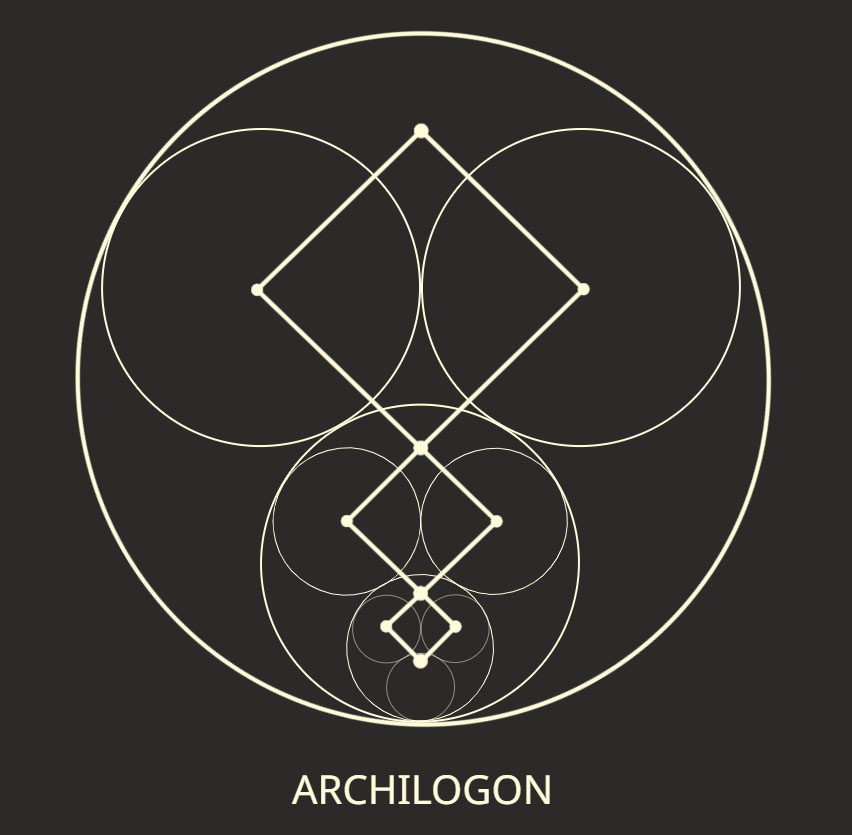
Let us seek to illustrate the twofold direction of human thought, through our archetypal diagram. It is crucial to visualize the relations among the forms of the diagram, for only a synoptic view can guarantee authentic comprehension. Abstraction and Speculation are distinct and antithetical processes. The distinction depends upon the kind of “contact” with the specific object of knowledge. In the Sensible World the senses “perceive” their phenomenal object; in the Intelligible World the mind “intuits” the Forms.
Starting from these two distinct functions, sensible Perception and intelligible Intuition, consciousness operates in two opposite directions. To use Kantian terminology, on the one hand, consciousness “abstracts”, that is, it transforms perceived Phenomena into Empirical Concepts; on the other, it converts Forms grasped by Intuition into Pure Concepts, seeking to interrelate them through an intentional activity called Speculation. From Thought we then pass to Language, namely to the symbolic representation of the concepts elaborated. We shall not, for now, enter into the distinction between Constant and Variable symbols.
The third step is verification, so that the fruit of knowledge may be regarded as solid and shareable. Whereas empirical representations must reckon with experimental tests, pure representations must be tested for logical consistency, in an effort to discover whether the hypotheses can correctly mirror the formal constraints posited.
It now appears clear that, to reach the dimension of Logos, one must, in a certain sense, “switch off” the senses, for the perceptions of Phenomena and their physical dynamics confound pure thought, which is engaged, in the silence of the inner self, in reconstructing formal dynamics.
In the chapter Nous we shall see in what way Kant altered this equilibrium by displacing Intuition into the dimension of sensibility. To the Principle!