Archilogon 036 - 5. Nous - 6. The Non-Place of A-Priori Forms
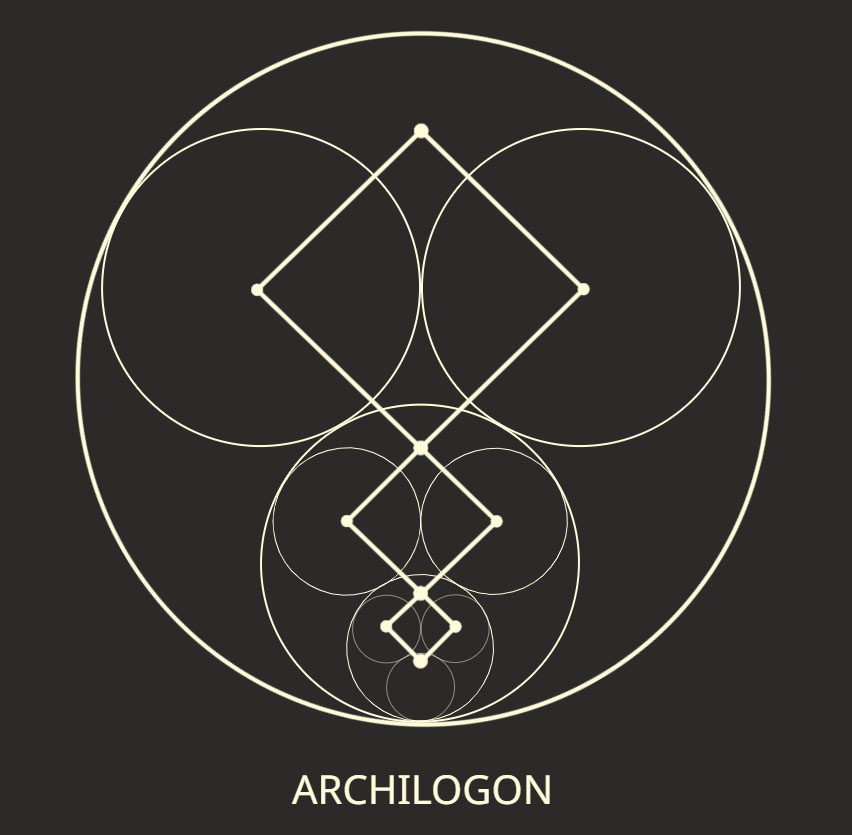
In this video, Elias Artista continues his project of situating Kant’s Transcendental Idealism within the archetypal diagram, thereby bringing into view Philosophy’s shift of attention from reality to the mind. From this arises a decisive question: if the world of Noumena is unattainable, why does Kant describe his own system as “idealist”? Elias then introduces Schelling’s critique, according to which Kant improperly appropriates the very term “Idealism”, drains Intuition of its orientation towards the transcendent, sharply divides mind from reality, and ultimately constructs a framework that is, in his view, inconsistent. Turning to the theme of the 'a-priori' (Space and Time), Elias identifies Kant’s blind spot: if these forms are not derived from experience, but are potential structures of the mind that are actualised only in the perception of the phenomenon, to what dimension do they belong? Precisely because they are universal, for Plato the “non-place” in which the Forms reside is not the individual mind, but the Intelligible World.
Archilogon – The key to Synthetic Logic. A project by Elias Artista.
Bibliography
Works Cited
- Immanuel Kant, Critique of Pure Reason, II, Paralogisms of Pure Reason, IV.
- Friedrich Schelling, Criticismo e Idealismo. (It. ed. Criticismo e Idealismo, ed. C. Tatasciore, Laterza, Bari, 1996, p. 15 and p. 20.)
- Immanuel Kant, Critique of Pure Reason, Introduction, Section I. (It. ed. Laterza, Bari, 2000, p. 54.)
- Immanuel Kant, Critique of Pure Reason, Fourth Paralogism: Of Ideality. (It. ed. Laterza, Bari, 2000, p. 557.)
- Immanuel Kant, Critique of Pure Reason, Transcendental Doctrine of Elements, Part I, Transcendental Aesthetic, First Section, Of Space, § 2, Metaphysical Exposition of this Concept, 1. (It. ed. Laterza, Bari, 2000, p. 56.)
- Immanuel Kant, Dissertazioni latine, Section III: I principi della forma del mondo sensibile, Bompiani, Milan, 2014.
Further Reading
- Friedrich Schelling, Sullo Spirito della Filosofia Platonica - Il Timeo di Platone: commento manoscritto (1794), ed. L. Follesa, Mimesis, Milano, 2022.
Video transcription
Kant’s Transcendental system, which we framed in the previous video within our archetypal diagram, raises a number of questions. The first is this: if the World of Ideas-Forms, the world of Noumena, is unattainable—because it is declared to lie beyond the human powers of knowledge—why does Kant use the term idealism to define his system?
In the Critique of Pure Reason he offers this reply:
“By ‘Transcendental Idealism’ I mean the doctrine according to which we regard Phenomena as mere representations and not as ‘things in themselves’, and according to which Time and Space are only sensible forms of our Intuition. This Idealism stands opposed to Realism, which regards Time and Space as something in itself, independent of our sensibility.”
Kant is telling us that everything we can know is only a representation of ours, a mere reflection of “something”, and that direct knowledge of whatever produces that reflection is barred to us. “Transcendent” would mean looking straight at the Noumena, which for Kant is impossible. “Transcendental”, by contrast, means analyzing the Noumena’s reflection upon the surface of that mirror which is our mind.
Yet this definition of Idealism, which Kant applies to his own doctrine, strikes some thinkers—Schelling, for instance—as an illegitimate appropriation:
“Kant begins from the fact that the ‘primum’ in our knowledge is Intuition. This would suggest that Intuition is the lowest degree of knowledge. Yet it is, instead, the highest element in the human spirit, that from which all our other cognitions derive their worth and their reality. Kant further says that what must precede Intuition is an affection of our Sensibility. Whence this latter arises, is a problem he leaves open. Here Kant intentionally neglects something which will, only later, appear as the final and supreme unresolved problem of Reason.”
As a realist, Schelling resists Kant’s dragging Intuition downwards. Yet what he cannot tolerate above all is the “rupture” Kant introduces between the human mind and reality, two dimensions that Kant separates in a stark and brutal way:
“For Kant’s disciples, the world and the whole of reality are something which, originally alien to our spirit, has no affinity with it, save the accidental one of acting upon it. And yet they dominate this world, which for them is merely contingent and could just as well be otherwise, with unknown laws that appear ‘impressed’ within their Understanding. Must we then suppose that, as ‘supreme legislators of Nature’, they transfer the laws of the Understanding to the things of the world, apply them freely and at will, and that this world obeys their arbitrariness? Is that what Kant taught? And how is such a system to be defined? It is certainly not ‘Idealism’, for every consistent idealist would be ashamed of it. Nor is it ‘Dogmatism’, either. What then is it? In truth, there has never existed a more ridiculous or more fantastical system. Nature has never been anything other than its laws.”
As a realist, Schelling senses that, by delegitimizing a consonance between thought and reality, Kant empties Idealism of its tension towards transcendent objectivity. Above all, he blocks access to the World of Forms unless it is mediated by the perception of a Phenomenon.
In his defense of Platonic Realist Idealism, Schelling is particularly vehement, especially because that term a-priori, which Kant introduces in support of his system, appears unstable. What a-priori means precisely is contentious. One thing, however, is clear: Kant cannot admit anything “transcendent”, for if anything were to elude empiria, his entire system would be brought back before the very problems he sought to resolve without recourse to imagination.
Kant writes:
“Although all our knowledge begins with experience, it does not follow that all knowledge arises from experience. Our empirical knowledge might be a mixture of what we receive by way of impressions and of what our faculty of knowledge supplies from itself, taking merely its occasion from sensible impressions. The question, therefore, is whether there are cognitions independent of experience and of the impressions of the senses. Such cognitions we call ‘a-priori’, and we distinguish them from empirical cognitions which have their sources ‘a posteriori’, that is, following experience.”
Among the a-priori—among forms not generated by experience, but elicited by it—are, first of all, the forms of Space and Time:
“Space and Time are certainly ‘a priori’ representations which are in us as the form of our sensible intuition even before any real object is determined by our Sensibility. Yet this ‘something material’ which is to be intuited in space necessarily presupposes a perception, and cannot, independently of it, which indicates the reality of something in space, be produced by the imagination. Sensibility, therefore, is what validates its reality in space and in time.”
Kant claims that, if an object is not perceived, and thus determined by the a-priori forms of Space and Time, it cannot be validated as a real object. The a-priori origin of Space is proved in the first point of the metaphysical exposition:
“For certain sensations to be referred to something outside me, that is, to something in a place different from my own, and for me to represent them as external and alongside one another, and thus not merely as different, but as placed in different locations, the representation of Space must underlie them. Outer experience is possible only through such a representation.”
Nor does the idea of Time arise from the senses. Rather, it is presupposed by them. For of all things that fall under the senses, we cannot judge whether they exist simultaneously, or one after the other, except by means of the idea of Time. Succession does not generate the concept of Time: it merely elicits it.
Space and Time are thus presuppositions. Kant maintains that the architecture of our mind contains these forms in potency, yet until they are activated by some perception, they remain latent. But—and this is the point—in the phrase “they remain latent”, the emphasis must fall on “remain”, not on “latent”.
For if these forms “remain”, the next problem is to understand “where” they “remain”. Kant is not clear on this. For Plato, by contrast, that non-place is precisely the World of Forms—a transcendent dimension—because the Forms subsist, that is, they “remain”, regardless of whether any mind exists to grasp them. From the realist standpoint, therefore, Kant’s Transcendental system halts at the threshold.
Space and Time are not first elements: they presuppose a formal and archetypal syntax that precedes them, and which Kant employs without grounding it. In other words, Kant does not notice that, when he tries to explain what Space and Time are, he is already using archetypal Forms—namely, the Forms of Unity and Multiplicity. Without invoking these two transcendent Forms, he could not logically determine their difference.
Space is the sensible, analogical translation of the Form of Unity, just as Time is the sensible, analogical translation of the Form of Multiplicity. This archetypal subsistence of Forms, antecedent to Concepts, is precisely what Parmenides will point out to Socrates in Plato’s dialogue. And the content of that celebrated exchange will be the subject of our next video. “To the Principle!”