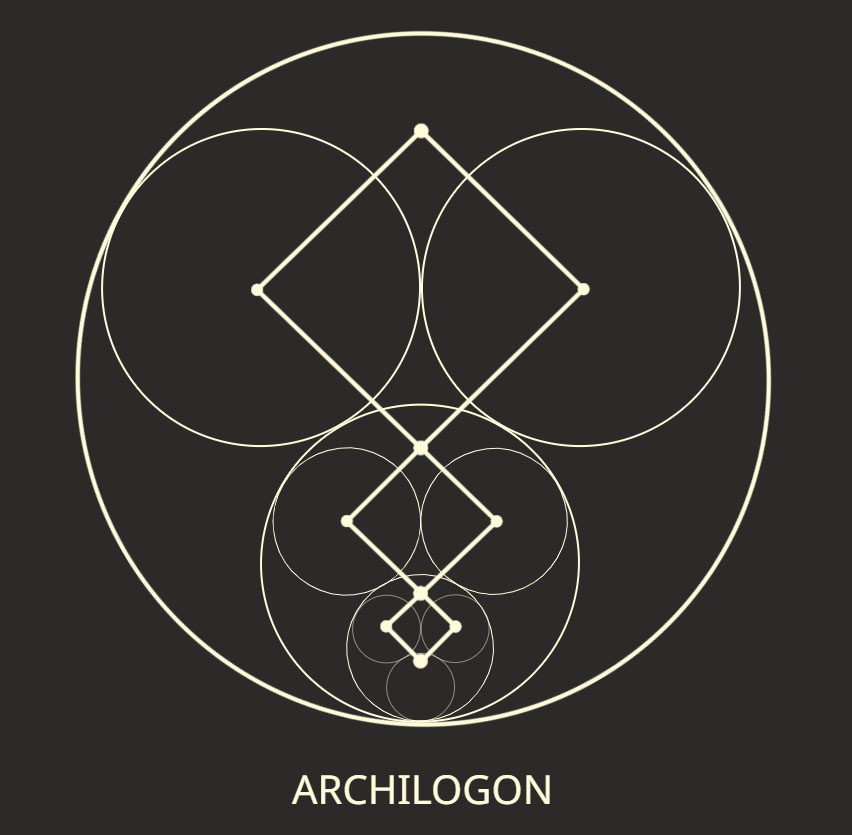
Archilogon 051 - 6. Academy - 10. The Aristotle Syndrome
In this video, Elias Artista confronts the “Aristotle problem”: to what extent can Plato’s most celebrated disciple be regarded as a reliable witness to his master’s thought? Drawing upon the analyses of Harold Cherniss, Matthias Baltes, Leonid Zhmud, and John Finamore, but above all upon the reconstruction of Synthetic Logic, the video advances the hypothesis that Aristotle never gained access to the Pythagorean core of Academic teaching or to the archetypal diagram. Platonic doctrines would consequently have been translated into the categories of an ontological system centred upon Substance, thereby inevitably altering their meaning. The comparison between the Platonic ‘Psyché’ and the Aristotelian ‘Soul’, between ‘Form’ and ‘Information’, and between ‘Potentiality’ and ‘Actuality’ reveals two radically different perspectives: Plato begins with abstract Unity in order to reconstruct the Logic of Reality, whereas Aristotle begins with concrete Multiplicity in order to investigate the constitution of individual entities. Finally, the video foreshadows the historical consequences of this divide, arguing that Aristotle’s immense authority shaped the reception of Plato for centuries and forced Idealism to survive at the margins of the rationalist tradition, in embryonic form within Hermetic and occult doctrines.
Archilogon – The key to Synthetic Logic. A project by Elias Artista.
Bibliography
Works Cited
- Leonid Zhmud, “Some Notes on Philolaus and the Pythagoreans”, in Hyperboreus, 4, No. 2, Bibliotheca Classica Petropolitana, St Petersburg, 1998, p. 18.
- John F. Finamore, Iamblichus: De Anima – Text, translation and commentary, Brill, Leiden, 2002, p. 82.
- Aristotle, Metaphysics, 1084a10–20.
- Matthias Baltes, Die Weltentstehung des Platonishen Timaios nach den Antiken Interpreten, ed. W. J. Verdenius and J. H. Waszink, Brill, Leiden, Vol. I (1976), pp. 17–18.
- Aristotle, Metaphysics, N 3, 1091a9.
- Plato, Seventh Letter, 341c–342a.
Further Reading
- Harold Cherniss, Aristotle’s criticism of Plato and the Academy, Russell & Russell, New York, 1962.
- Eduard Zeller, La Filosofia dei Greci nel suo sviluppo storico, La Nuova Italia, Florence, Part Two, 1966–1974.
- Werner Jaeger, Aristotele – Prime linee di una storia della sua evoluzione spirituale, La Nuova Italia, Florence, 1964.
Video transcription
The question of Aristotle’s reliability as a witness to Platonic thought has generated an immense debate, a comprehensive account of which can be found in the works of Harold Cherniss. Since antiquity, many have discerned a distortion of Plato in the writings of his most illustrious “disciple”. There is, however, no agreement as to the causes of that distortion.
Zeller, for example, argues that Aristotle misunderstood and distorted the Theory of Ideas because Plato had failed to expound it with sufficient clarity. Cherniss, for his part, maintains that the so-called Unwritten Doctrines attributed to Plato by Aristotle were the product of Aristotle’s own interpretation.
We do not possess the works Aristotle intended for publication. What survives are technical writings associated with his teaching at the Peripatos. After his death, these writings passed into the possession of his pupil and successor, Theophrastus. They then passed to Neleus and were eventually purchased by a wealthy bibliophile, Apellicon of Teos, who commissioned new copies and attempted to restore the damaged passages.
When the Roman consul Sulla conquered Athens, Apellicon’s library was brought to Rome, where the grammarian Tyrannion was entrusted with preserving and revising the texts. The first complete edition was prepared by Andronicus of Rhodes in the middle of the first century BC.
In arranging the manuscripts thematically, he placed the collection of writings on First Philosophy, as Aristotle called it, after the collection devoted to Physics. It was from this position that the work acquired the name Metaphysics.
It is difficult to reconstruct Aristotelian thought adequately from fragments and second-hand testimonies, especially since it undoubtedly passed through several stages of development. Nevertheless, a number of scholars agree that Aristotle presented Platonic doctrine in a distorted form. Rather than restoring its Pythagorean premises, he translated it into an ontological system founded upon Substance, thereby inevitably altering its meaning.
Matthias Baltes writes:
Aristotle does not approach Plato on Plato’s own premises. On the contrary, he presupposes his own system, takes Plato literally, forces him into that system, and then exposes the supposed contradictions.
Without going so far as to presume malicious intent, the reconstruction of Synthetic Logic leads us to hypothesise that Aristotle failed to grasp the underlying reasons for Platonism. This had momentous consequences for Philosophy, above all because Aristotle was almost immediately regarded as a reliable witness, given his supposed integration within the Platonic Academy.
We have repeatedly advanced a radical hypothesis: that Aristotle never gained access to the inner Pythagorean circle of the Academy and never saw the diagram. Indeed, there is no evidence of any direct exchange with Plato concerning this cornerstone of the doctrine. To grasp a paradoxical logic without teaching that is specifically directed, profound, and sustained over time is an undertaking destined to fail, even for the most brilliant minds.
Aristotle’s criticisms do not appear to be directed at teachings he received from Plato himself. Rather, they focus on the Dialogues and, in all probability, on accounts provided by certain Academics close to the master. Aristotle may have sought admission to the Academy’s inner teaching, while ultimately remaining an Acousmatic. Indeed, Aristotle himself repeatedly distances himself from those whom he calls “the so-called Pythagoreans”.
But on what sources did Aristotle base his accounts of the Pythagoreans? Given the scarcity of documentary evidence following the dispersal of the Pythagorean communities in southern Italy, it is plausible that his knowledge of Pythagoreanism depended to a considerable extent upon conversations with members of the Academy.
Leonid Zhmud writes:
There are too many coincidences between “Pythagorean” and “Academic” views for us to believe that Aristotle could draw a clear distinction between them.
Among the possible Pythagorean sources upon which Aristotle drew were Speusippus and Xenocrates, as well as, of course, Aristoxenus, who would leave the Academy to associate himself with the Peripatos.
Given the extreme difficulty of the subject matter and the probable secrecy binding the members of the Academy’s inner circle, the accounts upon which Aristotle based his critique may have been mistaken, approximate, or deliberately incomplete. A complex logic such as that of the Pythagoreans is particularly liable to misunderstanding, especially when the person describing it is not a Mathetic, but an Acousmatic or, worse still, a witness at second or third hand. It is therefore highly probable that the transmission of Pythagorean teachings beyond the original communities underwent an immediate and progressive deterioration.
John Finamore writes:
If Aristotle is to be believed, the Pythagoreans maintained that things in general, including what we would regard as abstract concepts such as “Justice” or “Marriage”, were “numbers” in a fairly literal sense.
The number of the Soul may have been “one”, if Alexander of Aphrodisias is to be believed; “two”, according to Hippolytus, who cites the Pythagorean Ecphantus; or even “four”, according to Pseudo-Plutarch and Sextus Empiricus. What precisely the Pythagoreans in question had in mind is very difficult to decipher.
In the case of physical objects such as a “horse” or a “tree”, it seems that at least the less sophisticated members of the sect drew arrangements of points — in the shape, for example, of a horse — and then counted them to obtain the “number of the horse”. This procedure, however, cannot be applied to concepts such as “Justice”, “Marriage”, or “Soul”. In such cases, some degree of symbolism is clearly involved.
It is, however, entirely possible that genuine Pythagorean doctrine was far more sophisticated than this and entailed systems of mathematical, or quasi-mathematical formulae, corresponding to all the features of the physical universe.
A particularly significant example of Aristotle’s misunderstanding of the Synthetic Logic associated with the Forms of the diagram concerns the relation between Numbers and the Forms of the Decad, a subject to which Speusippus had devoted particular attention in one of his lost works:
Now, if Number extends only as far as the Decad, as some maintain, the Ideas will soon be exhausted. For example, if the Triad is the “Essence of man”, what number will be the “Essence of horse”? The series of Ideal Numbers extends only as far as ten; it must therefore be one of the numbers contained within this range, since these are the Essences and Ideas. Yet the Ideas will be exhausted, for the species of animals alone greatly exceed them in number.
Because of the immense reputation Aristotle acquired, accounts of this kind would have extremely serious consequences for Philosophy. Scholars throughout the ages would attempt to understand Plato through Aristotle’s distorting lens, rather than reconstructing Synthetic Logic from its foundations, as Iamblichus, for example, would seek to do.
The history of Philosophy records numerous attempts to reconcile Platonism and Aristotelianism. Yet anyone attempting to reconcile the two systems must first overlook the fact that Aristotle rejects the separate existence of the Ideas and seeks to relocate Form — which we shall call Information here, to avoid confusion with Platonic Form — within the Phenomenon itself.
For Aristotle, Information is a real principle that determines the organisation and properties of Phenomena. The process of knowledge follows the same direction: it begins with individual Phenomena and, through Abstraction, arrives at knowledge of universal characteristics.
Plato, by contrast, does not abstract from the Phenomenon. He speculates upon Formal Relations that cannot be derived from an analysis of Substance. This is because his purpose is not to classify Phenomena, but to reconstruct the Logic of Reality through the archetypal diagram, as we shall see more clearly later.
The Psyché — the logical structure modelled by Plato upon the archetypal diagram, in order to “map” human interiority — becomes, in Aristotle, the Soul: a biological matrix of information that organises the individual living being and coordinates its functions. For this reason, when discussing Aristotle, we shall not use the term Psyché, but Soul, since the two designate entirely different objects.
The confusion subsequently introduced into philosophical debate by the use of the same term in two different senses would severely obstruct the development of authentic Metaphysics, especially when the term Soul was transferred into Latin culture.
The critique advanced by Aristotle in On the Heavens reinforces the hypothesis that he never had direct access to the diagram of the Psyché, but knew it only through verbal descriptions. Here Aristotle speaks generically of “geometrical figures” supposedly entrusted with the function of representing Time, without reconstructing the complete system within which those figures acquire their meaning.
Plato’s thought is founded precisely upon the archetypal diagram, which renders Synthetic Logic visible and makes it possible to overcome the barrier imposed by the Principles of Identity and Non-Contradiction. If Aristotle never saw the figure, or merely glimpsed it without gaining access to its deeper explanation, then he lacked the essential key required to reconstruct the system in its entirety.
Let us consider a further example. The celebrated theory of Potentiality and Actuality may be read as an ontological reworking of Platonic elements, an interpretation shared by the philosophers of the School of Chartres. Yet the meanings assigned to these two terms are profoundly different.
For Plato, Potentiality is the property of the Whole, while Actuality is the property of the Part. Aristotle, by contrast, transfers this polarity into the individual Substance: Potentiality denotes the possible developments of a Phenomenon, while Actuality is the realisation of those possibilities.
Aristotle’s interest is not directed towards the archetypal Relation between the Whole and the Part that lies at the heart of Platonic Idealism. It is directed towards the ontological constitution of the individual entity. The two perspectives are not without common elements, but they proceed in radically different directions.
Aristotle begins with concrete Multiplicity; Plato, with abstract Unity. Aristotle’s undertaking is Science; Plato’s is Philosophy.
Thus, without the visual support of the archetypal diagram underlying the Timaeus, Aristotle lacked the key required to reconstruct the Platonic system in its entirety. In some cases, his criticisms consequently assume a sarcastic tone:
The elements themselves, the Great and the Small, seem to cry out when they are dragged about in this way, for they are incapable of generating number.
A celebrated passage in the Nicomachean Ethics attests to Aristotle’s esteem for Plato. The acerbic tone of certain passages may therefore have been directed against those Platonists who upheld the doctrine without being able to clarify its premises adequately.
Whatever contingent or psychological reasons may have led Aristotle to reject Pythagoreanism, what matters for us as moderns is to establish a clear boundary and maintain a decisive distance between the two positions. Anyone who attempts to understand Plato through Aristotle risks misunderstanding the intrinsic foundations of Synthetic Logic.
Over the course of History, Plato and Aristotle would be idealised and elevated into “divinities” of thought. At the same time, the image of a direct and unmediated relationship between master and pupil would become firmly established, eventually giving rise to the legend that Aristotle was Plato’s “favourite”.
This phenomenon would constitute a major obstacle to the development of medieval Philosophy. For centuries, Aristotelian accounts would transmit an interpretation of Plato filtered through categories foreign to his system, thereby fulfilling the fears of a philosopher who preferred not to write rather than be misunderstood, above all by those who, perhaps in good faith, were convinced that they had understood him.
The reception of Aristotle also produced an unintended secondary effect. Beneath his gigantic shadow, Idealism was compelled for many centuries to survive underground, within esoteric literature, at the cost of losing part of its rational character. Few thinkers of exceptional strength would have the courage to reassess a tradition that had by then been discredited and, in some cases, ridiculed.
Drawn into Pistis by priests and magicians from the time of Nigidius Figulus onwards, Platonism would continue to survive in an ectoplasmic form. What would restore it to the path of Rationalism was neither the mystical and erudite enthusiasm of the Florentine Academy nor, later, the heroic frenzy of Giordano Bruno. It was instead the brilliant insights of the Neopythagoreans and, first and foremost, those of the School of Chartres. Upon these foundations, after centuries of emptiness, Nicholas of Cusa would re-establish authentic Metaphysics.
To the Principle!